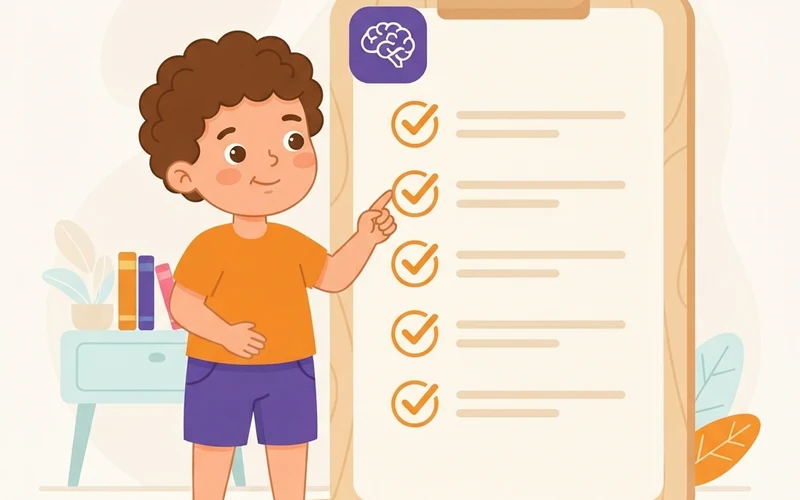
If your child understands material but forgets it fast, makes careless mistakes, or tires quickly during focused work, those are the clearest signals brain training is worth trying.
Not sure if brain training is relevant for your child, or if it's "just a phase" they'll grow out of? Here are five signs worth paying attention to. Most children show at least one occasionally, but two or more together is usually worth a closer look.
1. Understands concepts but forgets them quickly
If your child can explain something correctly right after learning it, but can't recall it days later without being re-taught, that's a retention gap brain training is specifically built to close. It's one of the clearest and most common signs we see.
2. Struggles to sit through a full lesson or homework session
Frequent breaks, fidgeting, or drifting attention during moderately long tasks points to an attention system that hasn't been trained to hold focus for extended periods, rather than a discipline problem that better rules will fix.
3. Careless mistakes on things they clearly know
Getting familiar material wrong isn't usually a knowledge issue. It's often an attention or working-memory slip, the kind where a child skips a step they know perfectly well simply because their focus drifted for a second.
4. Low confidence going into tests, even when prepared
Anxiety before assessments, even after genuine preparation, often stems from not trusting their own memory under pressure. It's a trainable issue, not a fixed personality trait, and one that tends to improve as a child builds a track record of remembering material reliably.
5. Academic effort doesn't match academic results
A child who studies for hours but underperforms relative to that effort is usually facing an efficiency problem, how they study rather than whether they try, not a work-ethic problem that more hours will solve.
Quick self-check
- Explains a topic well right after learning it, but forgets it within days
- Needs frequent breaks or redirection during a normal-length lesson
- Makes avoidable mistakes on material they clearly know
- Feels anxious before tests despite having prepared properly
- Puts in real effort but results don't reflect it
If two or more of these sound familiar, it's worth seeing how your child responds to structured brain training in a live setting rather than guessing from a checklist. Book a trial class, RM39, no long-term commitment required.