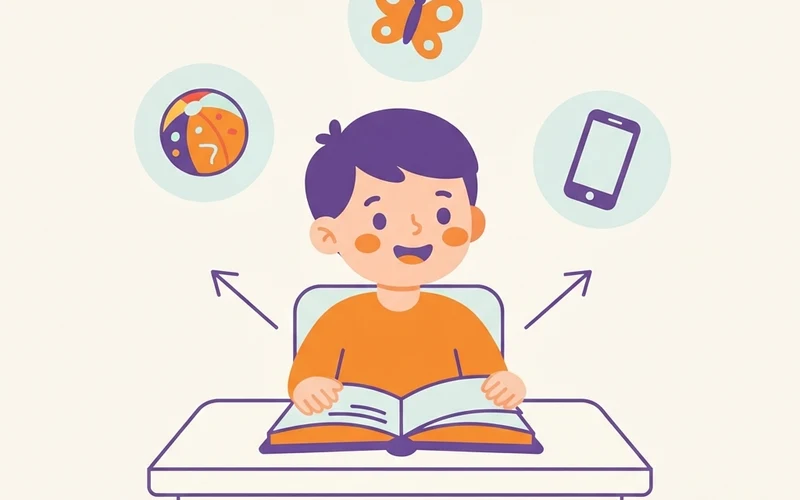
Distractibility is a processing pattern, not a personality trait. It comes from an attention system that treats every small sound or movement as equally urgent, and that pattern can be retrained.
"He's just easily distracted" is often said like it's a personality trait, something fixed, something the child was simply born with. In reality, distractibility is closely tied to how well-trained a child's attention system is, and that can change significantly with the right kind of practice.
What's actually happening in the brain
Your brain is constantly being pinged by sensory input: sounds, movement, light changes, even the feeling of a chair. Staying focused requires actively suppressing the urge to react to all of it and continuing to prioritise the one thing that actually matters right now. In children, this suppression ability is still developing, and it develops at very different rates from child to child, which is why two siblings raised the same way can have completely different attention spans.
Why some children are more affected than others
Differences in brainwave balance and processing speed mean some children's brains treat every distraction as equally urgent, making it exhausting to stay on one task for more than a few minutes at a time. This isn't about willpower or discipline. It's a processing pattern, and processing patterns respond to training the same way a muscle responds to exercise.
It's not about "trying harder"
Telling a distractible child to "just focus" is a bit like telling someone with poor eyesight to "just see better," an instruction that assumes the capability is already there and only needs to be activated by willpower. The underlying system needs support, not just instruction, and repeating the instruction more firmly rarely changes the outcome.
How brain training helps
#memohack™ specifically targets brain speed, energy, connectivity, and stamina, the four areas that underlie sustained attention. Structured exercises, including blindfold-based sensory training, help recalibrate how a child's brain prioritises information, essentially teaching it which signals deserve a reaction and which don't. Over weeks of consistent practice, this shows up as a child who can sit through a full lesson without needing constant redirection.
Curious what this looks like in practice? Book a trial class and see how your child responds.